EX10 — Finite-Slew Attitude
Tags: attitude · reaction-wheel envelope · observation pointing
Input: finite-slew-attitude.yaml · Runtime tier: standard · Recommended views: 3D, Attitude, Analysis
Purpose
Compare requested observation pointing with the attitude actually achievable under a finite analytic reaction-wheel slew envelope.
Setup
Six satellites observe three regional targets for 12 hours at a 30-second cadence. The attitude model begins in nadir/Sun mode and realizes commanded transitions with a named reaction-wheel profile.
astraeus run astraeus-resources/examples/user/finite-slew-attitude.yaml
RunSpec Focus
The important choice is the finite realization mode. Observation campaigns create pointing requests; the attitude stage records slewing, settling, and available states rather than assuming instantaneous pointing.
adcs:
  default_mode: nadir_sun
  realization:
    mode: slew_envelope
mission:
  kind: observe
Results
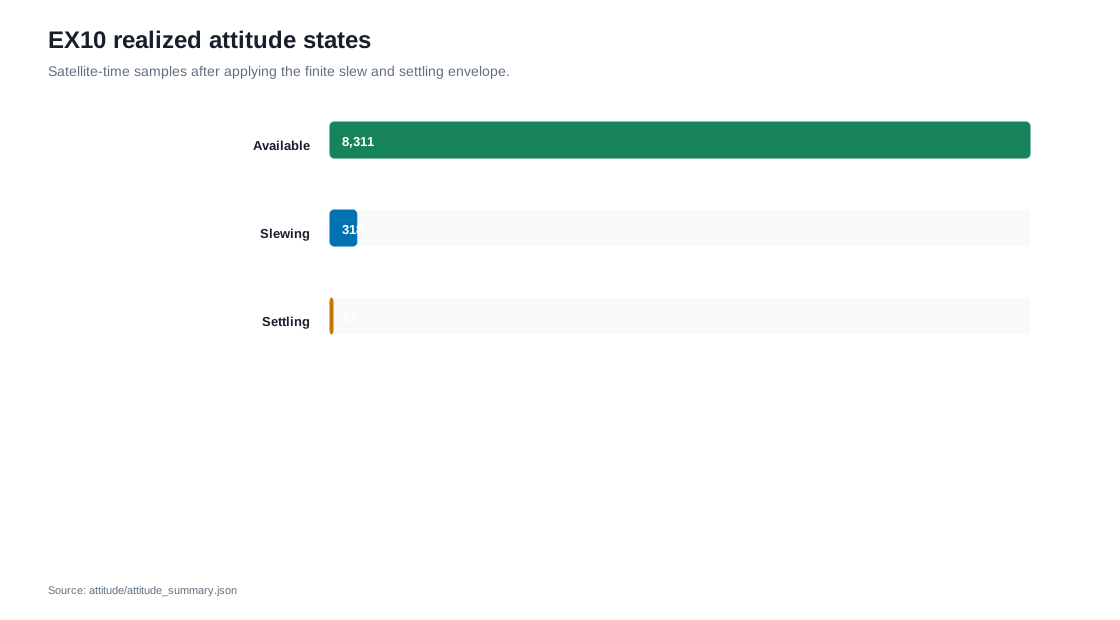
The reference run completed successfully in 1.61 seconds. Across 8,646 satellite-time samples, mean pointing availability was 96.74%. The model recorded 98 transitions: 91 completed and seven were interrupted. It also produced 176 MB of observation products across the three targets.
Artifacts To Inspect
| Artifact | What it shows |
|---|---|
attitude/attitude_summary.json |
Realization mode, transition outcomes, state counts, and pointing availability |
attitude/timeline_attitude_commanded.parquet |
Requested pointing modes and targets |
attitude/timeline_attitude_realization.parquet |
Available, slewing, and settling state at every sample |
mission/observation_capture_events.parquet |
Products actually captured under realized pointing |
Interpretation
The 3.26% unavailable fraction is operationally meaningful: it is time spent slewing or settling rather than satisfying the requested pointing. Compare the commanded and realized attitude timelines before using geometric observation opportunities as collectible data.