EX05 — Service Downlink
Tags: communications · gateways · scheduling · latency
Input: service-downlink.yaml · Runtime tier: standard · Recommended views: 2D, Analysis
Purpose
Follow offered user traffic through user access, an explicit gateway path, RF closure, capacity scheduling, and delivery. This is the first example where geometric opportunity and delivered service are deliberately separated.
Setup
The case uses 24 satellites, three gateways, a 10° service grid, and six hours of duplex offered load at a two-minute cadence.
astraeus run astraeus-resources/examples/user/service-downlink.yaml
RunSpec Focus
The transport scheduler requires a complete gateway path and applies explicit satellite and feeder capacity limits.
transport:
  scheduler:
    path_mode: gateway_required
    scheduler_mode: greedy_capacity
    max_uplink_bps_per_sat: 2000000
    max_feeder_bps_per_sat: 20000000
    max_parallel_ue_flows_per_sat: 16
Results
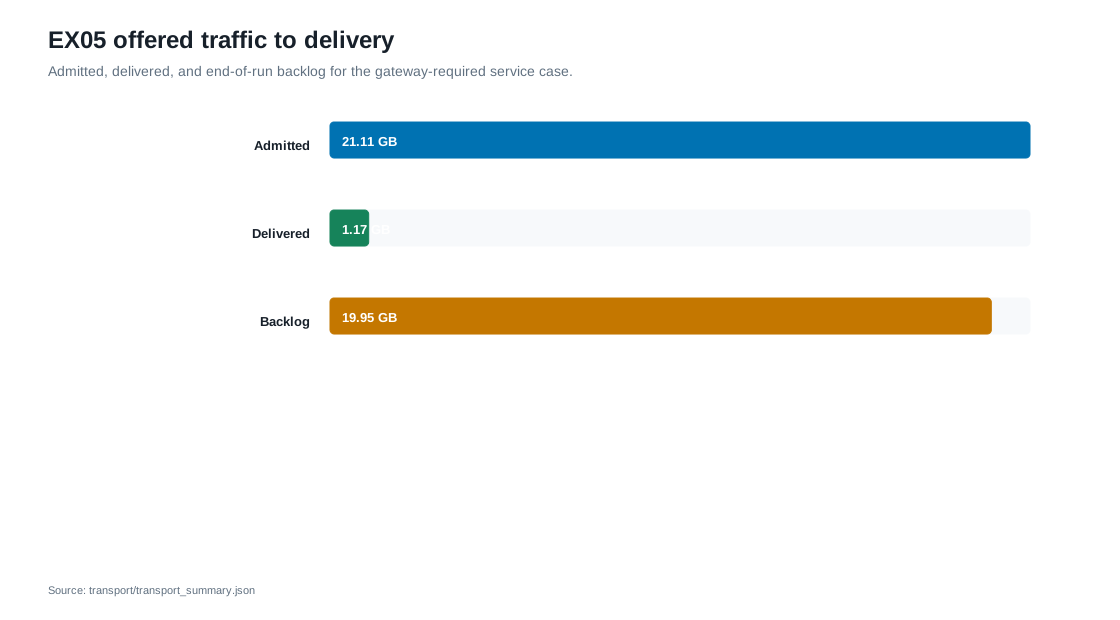
The reference run completed successfully in 10.48 seconds. It admitted 21.112 GB and delivered 1.167 GB, a byte delivery rate of 5.53%. Served paths had a 41.80 ms p95 latency. Only 0.386% of point-time samples had complete routed service, while 7.88% had user-link opportunity; 116,835 samples were denied because no closed end-to-end candidate existed.
Artifacts To Inspect
| Artifact | What it shows |
|---|---|
mission/service_summary.json |
User opportunity, routed service availability, and transfer latency |
transport/transport_summary.json |
Admission, delivery, backlog, denial reasons, link margins, and scheduler totals |
transport/kpi_summary_gateways.parquet |
Delivery and loading resolved by gateway |
transport/transport_backlog_timeline.parquet |
Backlog volume, item count, and age through the run |
Interpretation
The difference between user-link opportunity and complete routed availability shows that the gateway geometry is the primary constraint in this configuration. Positive served-path RF margins and low path latency do not compensate for a missing complete path. Use the transport and service artifacts to distinguish these causes before changing capacity.