EX11 — Spacecraft Power Balance
Tags: power · service activity · state of charge
Input: spacecraft-power-balance.yaml · Runtime tier: standard · Recommended views: Power, Analysis
Purpose
Test whether solar generation and battery storage sustain a realistic service timeline after communications activity is converted into spacecraft loads.
Setup
Twenty-four satellites serve a European region through two gateways for 24 hours. Transport activity drives payload and feeder operating states in the power model.
astraeus run astraeus-resources/examples/user/spacecraft-power-balance.yaml
RunSpec Focus
Activity coupling is the central choice. The power model receives the resolved service timeline rather than applying only a constant payload load.
power:
  activity_coupling_enabled: true
  battery:
    capacity_wh: 2000
    soc_init_pct: 50
  payload:
    policy:
      mode: hybrid
      driver: required
    coupling:
      active_beam_w: 12
Results
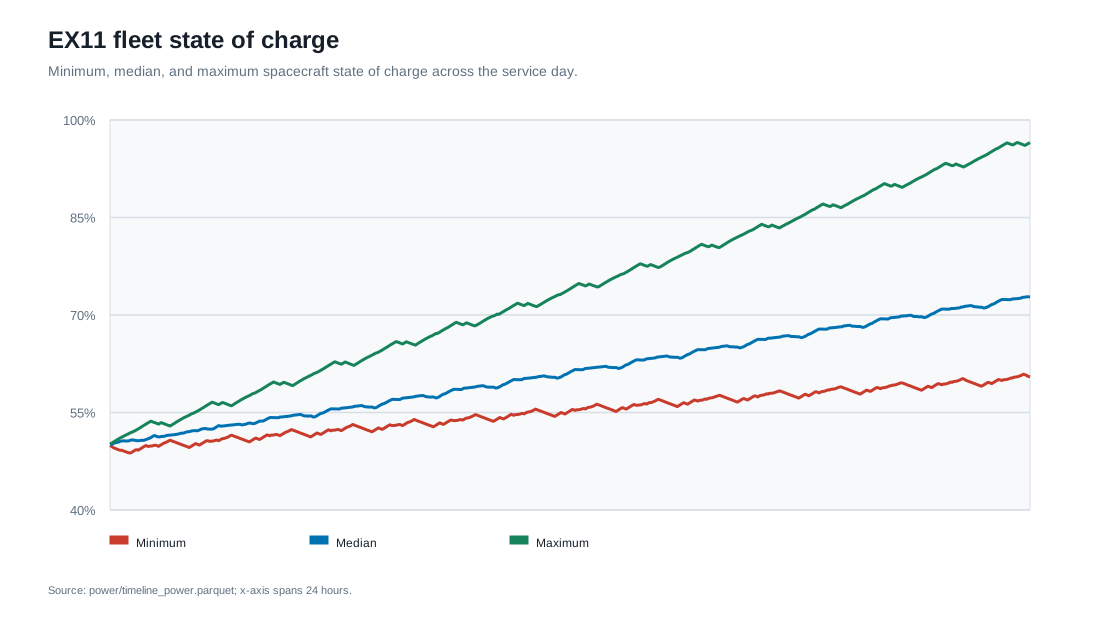
The reference run completed successfully in 7.07 seconds. It delivered 1.699 GB of 2.076 GB admitted traffic (81.80%). Fleet state of charge stayed between 48.77% and 96.55%, with zero energy-deficit fraction and no power infeasibility.
Artifacts To Inspect
| Artifact | What it shows |
|---|---|
power/power_summary.json |
Fleet state-of-charge envelope, feasibility, generation, and energy margins |
power/timeline_power.parquet |
Generation, component loads, net power, state of charge, and violations by satellite |
power/power_demand_summary.json |
Mission and subsystem power-driver rollups |
activity/activity_timeline.parquet |
Service activities that drive payload and feeder loads |
Interpretation
The configured electrical system sustains this service day, but the broad state- of-charge range shows why a timeline is more useful than a daily energy total. Inspect individual satellites and eclipse periods before treating the fleet minimum as adequate design margin.